
How Much Alcohol Do You Need for a Wedding or Party?
Our rule of thumb for estimating liquor, beer and wine by guest count and hours, with a chart for 50 to 200 guests, plus ice, mixers and tips to avoid overbuying.
Buying alcohol for an event is where most first-time hosts get nervous. Buy too little and the bar runs dry at 9 p.m. Buy too much and you’re storing 40 bottles of wine in the garage. Here’s the rule of thumb we start every shopping list with.
Step 1: Estimate drinks per guest
Our rule of thumb: 2 drinks per guest in the first hour, then 1 per guest for each hour after. Guests arrive thirsty and slow down as the night goes on.
| Hours of bar service | Drinks per guest |
|---|---|
| 2 hours | 3 |
| 3 hours | 4 |
| 4 hours | 5 |
| 5 hours or more | 5 (capped) |
We cap it at 5 drinks per guest, even for long events. Past that point, most hosts end up overbuying, and the leftovers sit in the garage.
Total drinks = drinking guests × drinks per guest
A 100-guest party with a 4-hour bar comes out to 500 drinks.
- Count drinkers, not invitations. Leave out kids and anyone you know won’t drink.
- Daytime and family events run lighter. Brunches, showers and graduation open houses often need less.
- Known party crowds run heavier. You know your guests better than any formula.
Step 2: Split it by drink type
For most events, we start with this split:
| Drink | Share of drinks |
|---|---|
| Liquor and cocktails | 60% |
| Beer and seltzers | 25% |
| Wine | 15% |
Liquor leads because cocktails and mixed drinks are what most guests order once a real bar is open. Then adjust for your crowd:
- A football watch party or tailgate leans toward beer and seltzers.
- A dinner party or winery-style wedding leans toward wine.
- A beer-and-wine-only bar drops liquor and splits about 60% beer and seltzers, 40% wine.
Step 3: Turn drinks into bottles
- Liquor: a 750 ml bottle makes about 16 drinks at a 1.5 oz pour. A 1.75 liter “handle” makes about 39, and usually costs less per drink.
- Beer and seltzers: one can or bottle is one drink. A case is 24.
- Wine: a 750 ml bottle pours about 5 glasses.
Quick chart: a 4-hour full bar
Using 5 drinks per guest and the 60/25/15 split, rounded up so you don’t run short:
| Guests | Total drinks | Liquor | Beer and seltzers | Wine |
|---|---|---|---|---|
| 50 | 250 | 10 bottles (or 4 handles) | 3 cases | 8 bottles |
| 100 | 500 | 19 bottles (or 8 handles) | 6 cases | 15 bottles |
| 150 | 750 | 29 bottles (or 12 handles) | 8 cases | 23 bottles |
| 200 | 1000 | 38 bottles (or 16 handles) | 11 cases | 30 bottles |
For a 3-hour bar, use 4 drinks per guest instead of 5. For anything 5 hours or longer, stay at 5.
Every crowd is different, so treat these numbers as a starting point. We look over every shopping list we build and tailor it to the specific event.
Splitting wine between red and white
For most Columbus crowds, white and rosé outpace red, especially at summer and outdoor events. A good default is 60% white or rosé, 40% red. Flip it for a winter dinner or a steak-heavy menu.
If you’re doing a champagne toast
A 750 ml bottle of sparkling wine pours about 6 to 8 toast-size glasses. For 100 guests, that’s 13 to 17 bottles. Many guests take one sip and set it down, so you don’t need a full pour for everyone.
Don’t forget the rest of the bar
Alcohol is only half the shopping list.
- Ice: plan on 1 to 2 pounds per guest. Use the high end for outdoor summer events, or if ice is also chilling beer and wine in tubs.
- Mixers: for a full bar, plan on about one liter of mixer (soda, tonic, juice) for every 4 to 5 mixed drinks.
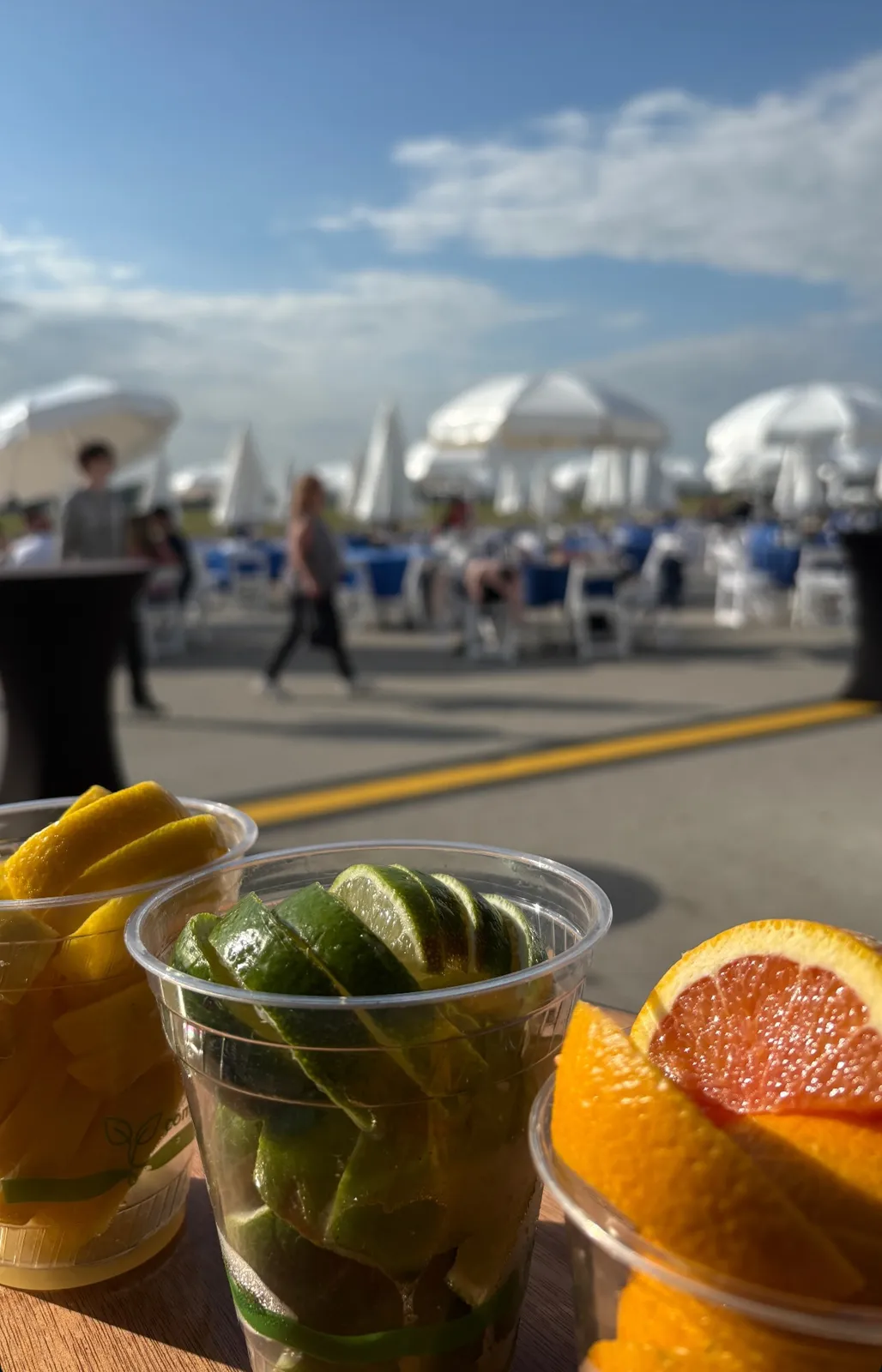
- Garnishes: limes and lemons go fastest. For 100 guests, start with about 20 limes and 10 lemons, plus whatever your signature cocktails call for.
- Cups: plan on about 3 cups per guest. Guests set drinks down and grab a fresh one.
- Non-alcoholic drinks: water, soda and a zero-proof option for kids, drivers and anyone not drinking.
How to avoid running out (or overbuying)
- Buy for the high end of your guest count. Running dry is worse than leftovers.
- Ask your store about returns before you buy. Policies on unopened bottles vary, so get the answer up front.
- Buy liquor in larger bottles. 1.75 liter bottles are usually cheaper per drink.
- Keep the plan simple. Two signature cocktails plus beer and wine is easier to shop for than a full back bar.
- Let leftovers stock your home bar. Unopened beer and liquor keep well; it’s rarely wasted.
Frequently asked questions
How much alcohol do I need for 100 guests? For a 4-hour full bar, plan on about 500 drinks: roughly 19 bottles of liquor (or 8 handles), 6 cases of beer and seltzers and 15 bottles of wine. Adjust for your crowd and your menu.
Is it cheaper to buy my own alcohol? Often, yes. When you buy it yourself, you pay store prices and keep what’s left, instead of paying a per-drink or per-person markup.
Do bartenders bring the alcohol? At Top Shelf, no. We don’t sell alcohol. You buy it, we serve it, and we tell you exactly what to buy.
How much ice do I need? Plan on 1 to 2 pounds per guest, more for hot outdoor events.
Or let us build the list for you
Every Top Shelf bartending booking includes a free custom shopping list built for your guest count, your menu and your crowd. You tell us who’s coming and what you want to serve, and we tell you exactly what to buy. Our liquor store partner can even deliver it to your event.
Want us to handle it?
Get a custom quote, usually back within 4 hours. Or read more about our mobile bartending.
Get a custom quote