
How Many Bartenders Do You Need for Your Event?
How guest count, drink menu and service style change how many bartenders you need, with a staffing chart by guest count and real examples.
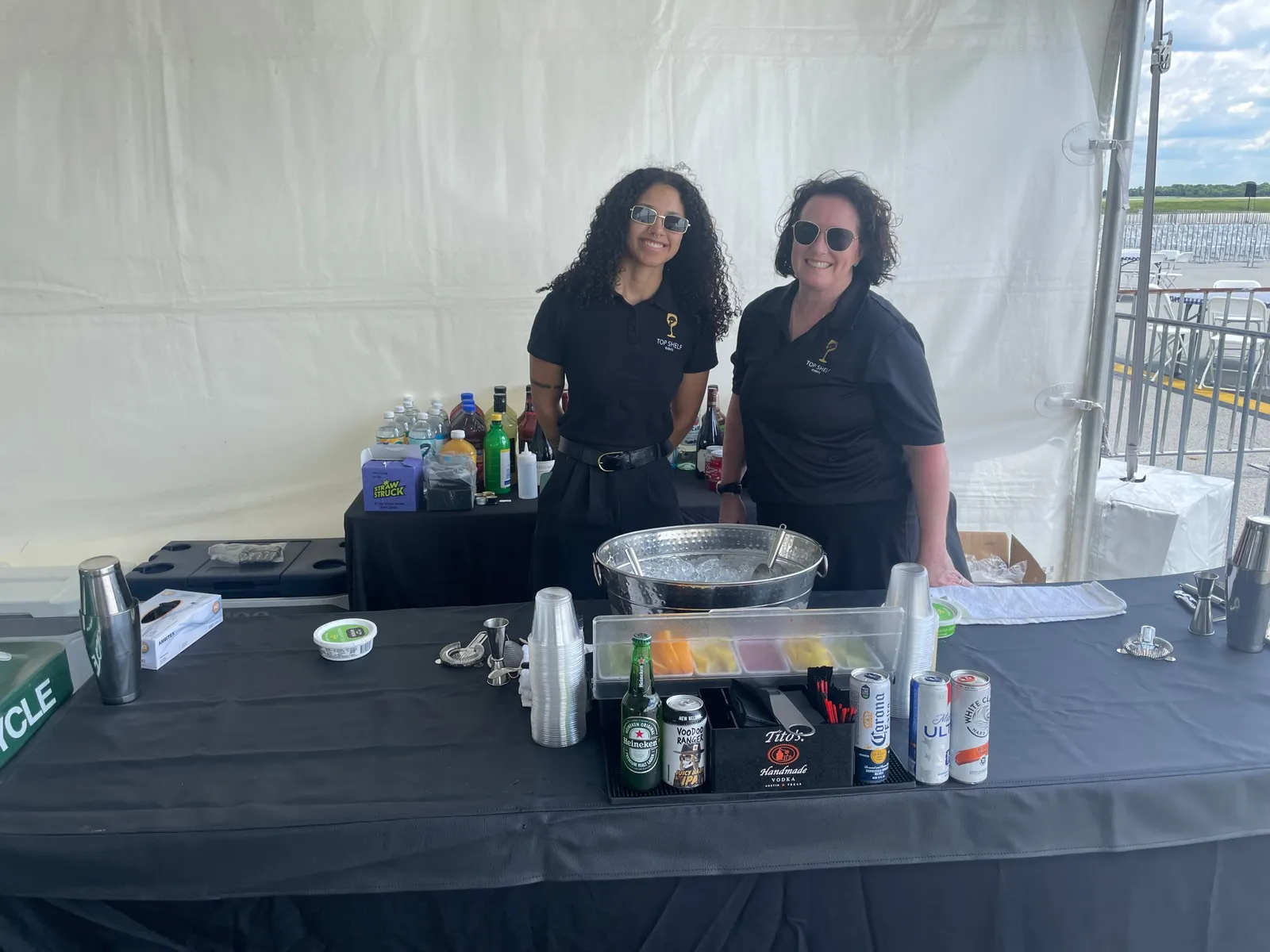
Too few bartenders and your guests spend the night in line. Too many and you’re paying people to stand around. The right number comes down to who’s drinking, what’s on the menu and when the rush hits. Here’s how we work it out for the 250+ events we staff each year.
The quick answer
At Top Shelf, we start with one bartender per 75 guests for a full bar and one bartender per 100 guests for beer and wine. Then we adjust for your menu, your timeline and your space.
| Guests | Beer and wine only | Full bar or cocktails |
|---|---|---|
| Up to 50 | 1 bartender | 1 bartender |
| 75 | 1 bartender | 1 bartender |
| 100 | 1 bartender | 2 bartenders |
| 150 | 2 bartenders | 2 bartenders |
| 200 | 2 bartenders | 3 bartenders |
| 300 | 3 bartenders | 4 bartenders |
Treat the chart as a starting point, not a rule. The sections below explain when to add a bartender and when you can safely go with fewer.
1. Count drinkers, not invitations
Guest count is where everyone starts, but what matters is how many people will actually order drinks.
- Kids and teens don’t need a bartender’s time, though they’ll love a zero-proof drink.
- Daytime events like brunches, graduation open houses and baby showers usually see lighter drinking.
- Evening weddings and company parties tend to have most guests drinking, often heavily in the first hour.
- Open-house style events, where guests come and go, spread the crowd out. A 200-guest graduation open house rarely has 200 people at the bar at once.
If 40 of your 150 guests are kids, plan for about 110 drinkers.
2. What’s on the menu matters more than you think
The drinks you serve change how fast each bartender can work.
- Beer, seltzers and wine are fast: open, pour, hand off. One bartender can keep up with a big crowd.
- One or two signature cocktails add a little time per drink. Batching them ahead keeps the line moving.
- A full bar with made-to-order cocktails is the slowest. Every martini or old fashioned takes real time.
A good middle ground for many hosts is beer, wine and two signature cocktails. Guests get something special, and the bar stays fast.
3. Plan for the rush, not the average
Bars aren’t busy evenly through the night. Plan for the busiest 30 minutes, because that’s what guests remember.
- Weddings: cocktail hour right after the ceremony is the crunch. Everyone arrives thirsty at once.
- Corporate events: the first round after doors open, and again after speeches end.
- Holiday parties: the first hour, when everyone arrives and grabs a drink before dinner.
- Tailgates and festivals: steady all day, with spikes before kickoff or headliners.
If your timeline has a hard rush, like 150 guests walking from the ceremony to cocktail hour together, add a bartender even if the chart says you don’t need one.
Real examples
| Event | Guests | Menu | What we’d usually staff |
|---|---|---|---|
| Backyard 40th birthday | 50 | Beer, wine, one cocktail | 1 bartender |
| Barn wedding | 150 | Beer, wine, two signature cocktails | 2 bartenders |
| Black-tie wedding | 150 | Full bar | 2 bartenders, plus 1 for cocktail hour if the rush is heavy |
| Graduation open house | 200 (come and go) | Beer and wine | 1–2 bartenders |
| Company holiday party | 250 | Full bar | 3–4 bartenders |
| Corporate client event, two bar stations | 200 | Beer, wine, cocktails | At least 1 per bar, so 2–3 |
Other things that change the number
- Multiple bar locations need at least one bartender each, even if guest count is low.
- Outdoor summer events go through more drinks and much more ice. Plan a little heavier.
- Passed drinks or champagne toasts need servers, not just bartenders. Bartenders pour; servers carry.
- Long events (5+ hours) may need staggered breaks, which can mean one extra person.
- Tight spaces limit how many bartenders can work one bar. A 6-foot bar fits two bartenders comfortably, not three.
- Food service is a separate job. If you also need help clearing plates, refilling a buffet or bussing tables, add event servers.
When you can go with fewer
- Your menu is beer and wine only.
- Guests arrive over several hours instead of all at once.
- It’s a daytime event or a lighter-drinking crowd.
- You’re serving a self-serve option, like a beer tub, for part of the event.
Bartenders vs. servers: who does what
| Role | What they do |
|---|---|
| Bartender | Pours and mixes drinks, checks IDs, keeps the bar stocked, cuts off guests who’ve had too much |
| Event server | Passes drinks or appetizers, clears tables, refills food stations, keeps the space tidy |
| Lead bartender | Runs the bar team, talks with you or your planner during the event, handles anything unexpected |
Frequently asked questions
Do I need a bartender for a small party of 20–30 guests? Yes, if you want to enjoy the party instead of working it. One bartender handles that size easily and keeps an eye on responsible serving.
Is one bartender enough for 100 guests? For beer and wine, usually. For a full bar or a cocktail-heavy menu, plan on two, or the line will build during your busiest stretch.
What happens if a bartender gets sick the day of my event? With a team of 30+ trained staff, we have backup. That’s one of the biggest differences between a company and a solo bartender.
Do bartenders also check IDs? Every Top Shelf bartender is TIPS-certified, which means they’re trained to check IDs and serve responsibly.
We’ll recommend the number for you
Every Top Shelf quote is built by a person, not a pricing page. Tell us your guest count, menu and timeline, and we’ll recommend how many bartenders you need and explain why. Because we price à la carte, you only book what your event actually needs.
Want us to handle it?
Get a custom quote, usually back within 4 hours. Or read more about our mobile bartending.
Get a custom quote